

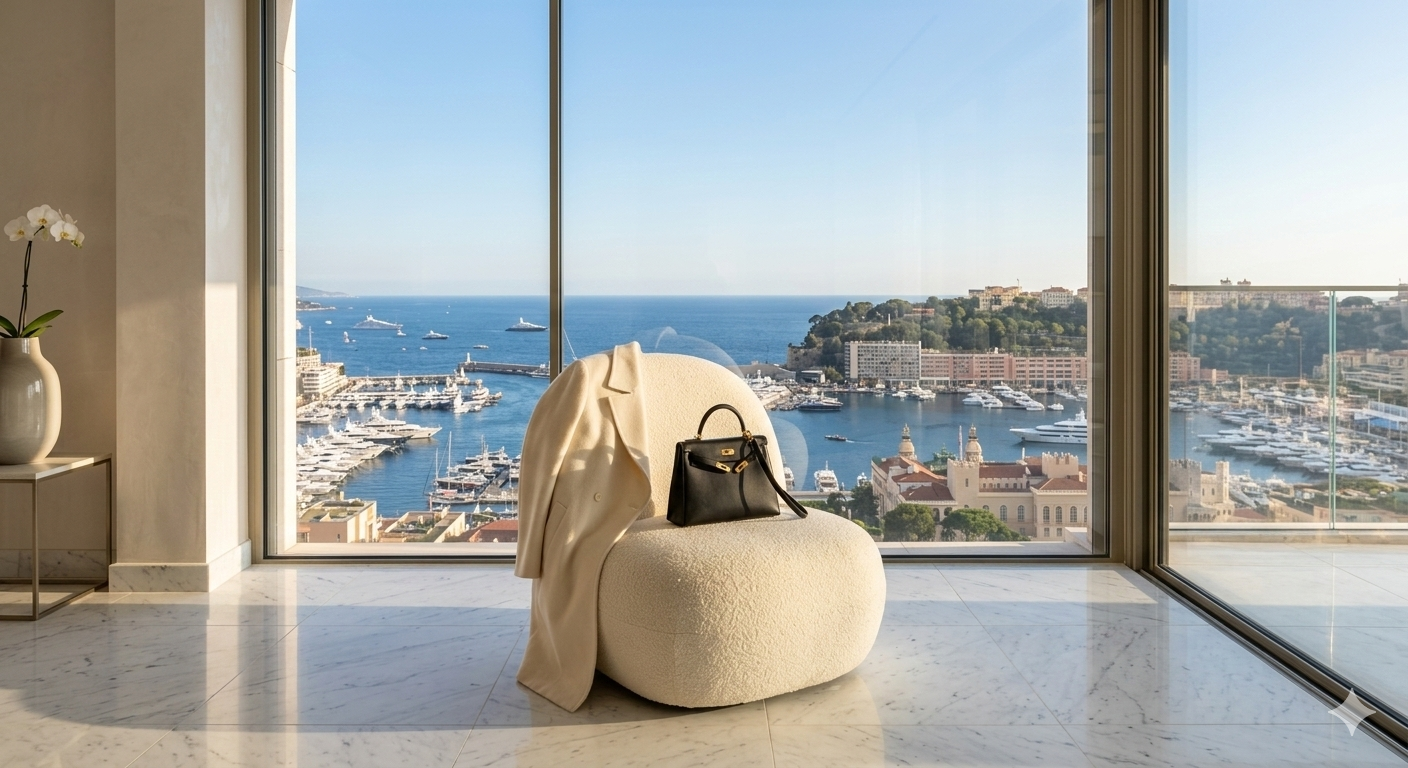
Designing an apartment in Monaco means working within some of the world's most demanding real estate constraints — and with its most extraordinary light. Here's what the process genuinely involves.
The constraint that changes everything
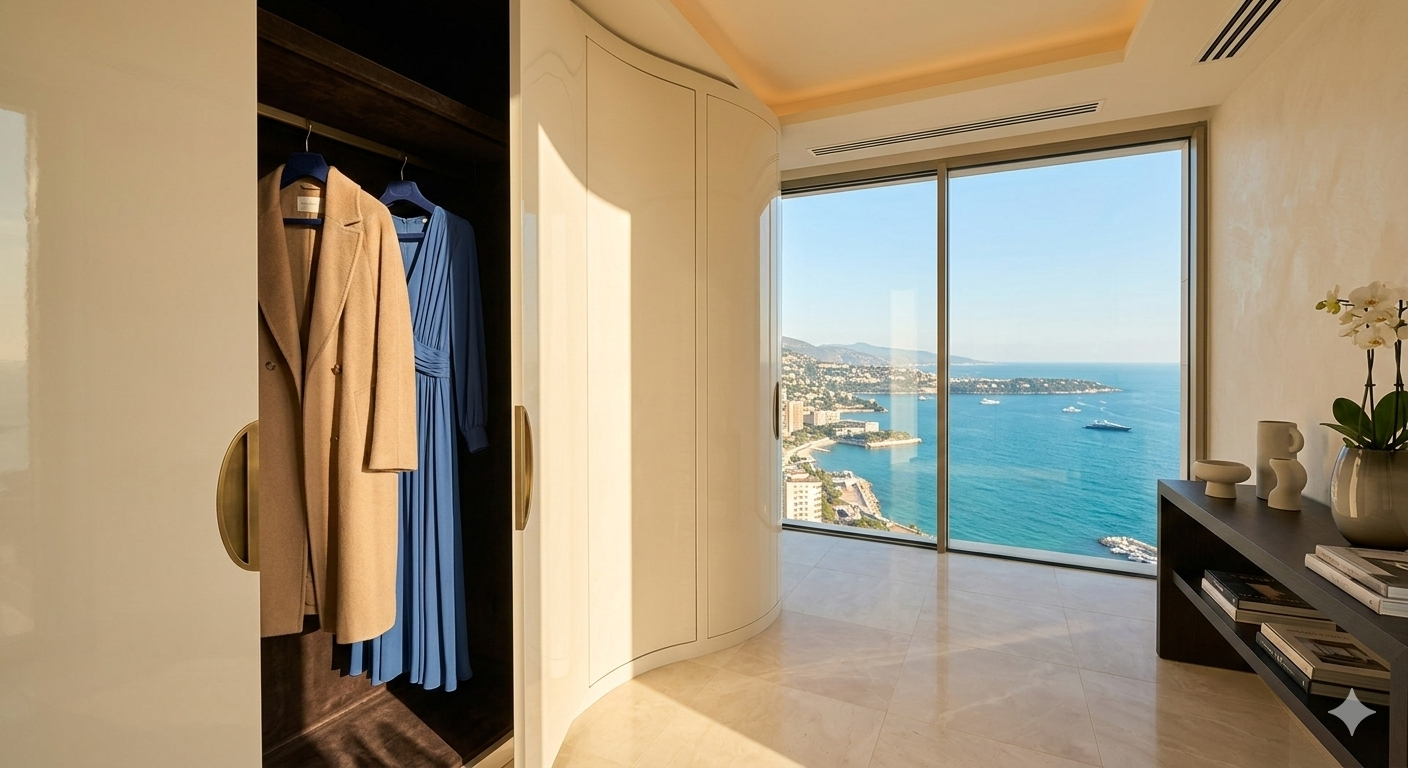
Monaco covers 2.02 km² and houses approximately 38,000 residents — the most densely populated sovereign state on earth. Direct consequence for interior design: space is finite, precious, and almost never wasted. Even penthouses in the Carré d'Or, which can reach 400 to 600 m², are designed as complete worlds — reception spaces, private retreats, offices, guest suites — all within a single footprint. Interior design in Monaco is fundamentally about compression: how to contain an entire lifestyle within a space that, in any other city, would be considered insufficient. The answer is not minimalism — it's precision.
Light as a design material
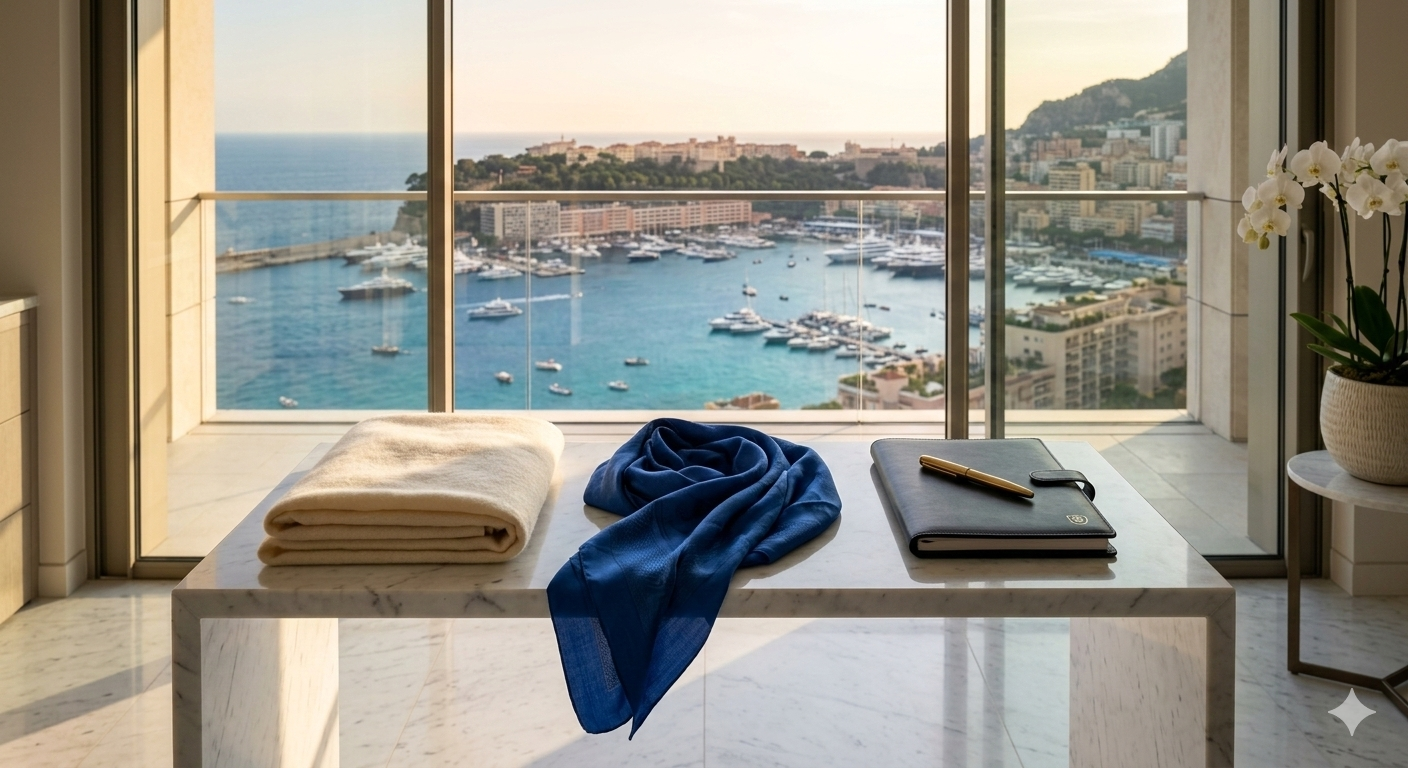
Monaco faces south-southwest, with the Mediterranean creating a quality of light genuinely unlike anywhere else in Europe. In a well-oriented apartment — particularly in the Larvotto or Monte-Carlo districts — the afternoon light is extraordinary: warm, consistent, reflected off the water. Warm whites — Benjamin Moore's White Dove, or Farrow & Ball's Pointing — behave very differently in Monaco than in London or Paris. Stone in warm ivory tones — Borghini marble from the Apuan Alps or Crema Marfil from Spain — responds to this light in a way cooler materials simply cannot replicate.
The four neighbourhoods — and why they matter for design
Monte-Carlo: The most prestigious address. Apartments tend toward the formal — generous reception spaces, a more classical vocabulary often appropriate.
Larvotto: The eastern residential district, with direct beach access. Interiors here can afford to be lighter and more relaxed — the connection to the sea is a real asset worth designing toward.
Fontvieille: Quieter, preferred by clients who value discretion over prestige. Design can be more personal and less performative.
La Condamine: The market district, at a human scale. Properties often have original architectural character worth preserving.
On sourcing: what Monaco cannot provide
Monaco's interior design supply chain is necessarily international. For bespoke cabinetry, I work with artisans in the Veneto region — the same workshops that supply the major European design houses. For stone: quarries in Carrara, Almería, and Portugal. For custom upholstery: ateliers in Paris and London. Clients whose interiors are sourced entirely from Monaco showrooms end up with spaces that look like Monaco showrooms. The point is to create something that could only belong to you.
"I am going to make everything around me beautiful — that will be my life." — Elsie de Wolfe, the first professional interior decorator
Discover my Residential Interior Design service to understand what a fully bespoke approach to your Monaco residence can look like.


%20(1).webp)