

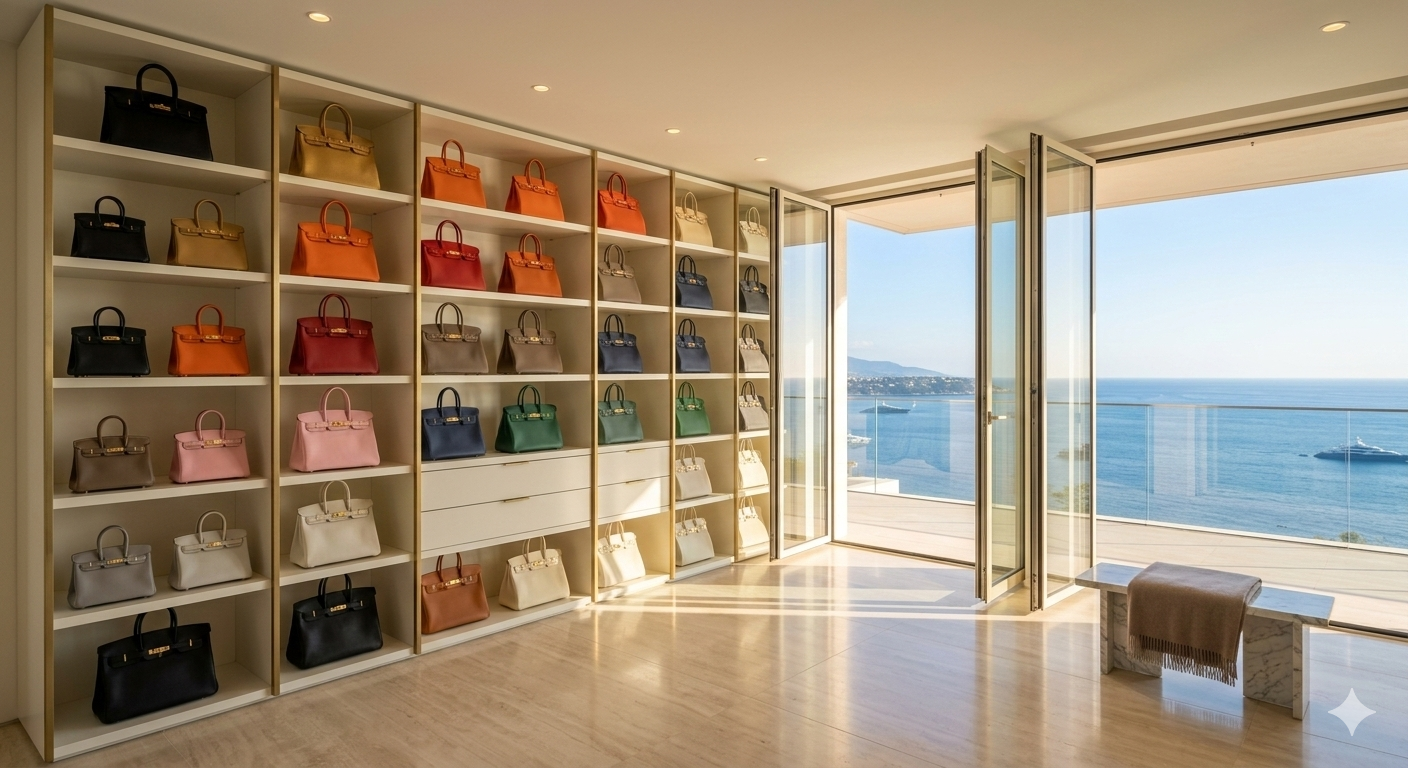
The Birkin is the most coveted bag in the world and the most misunderstood to buy. After years of navigating Hermès relationships for clients, here is what actually happens — and what you need to know before you walk into a boutique.
The myth and the reality
The Hermès Birkin is, by almost any measure, the most valuable handbag in the world. At auction, rare crocodile or ostrich versions in exceptional colours regularly surpass €50,000 — and in some cases approach €300,000. The standard leather versions in togo or clemence start around €9,000 to €12,000 at current retail prices. The secondary market consistently prices them at a premium to retail — sometimes a significant one for the most sought-after combinations.
None of this is a secret. What is less commonly understood is what buying a Birkin actually involves — and why the experience is genuinely unlike purchasing anything else in luxury retail.
You cannot simply walk in and buy one
This is the first and most important point. Hermès does not display Birkins on the shop floor. They are not available on the website. You cannot call the boutique and reserve one. The Birkin allocation system is based entirely on purchase history and relationship with the house. A client who has spent consistently across ready-to-wear, shoes, home goods, silk, and small leather goods over a period of time builds what the industry calls a purchase history — an internal record that informs whether and when a sales associate will offer a Birkin.
This system is not written down anywhere by Hermès and is never officially acknowledged. It is, however, completely real and understood by anyone who works in or adjacent to the industry. The clients I assist who have successfully purchased Birkins at retail have done so either because they had a genuinely long relationship with a specific boutique, or because they arrived with a purchasing strategy that built that history systematically over twelve to eighteen months.
Size, leather, colour, hardware: the four decisions
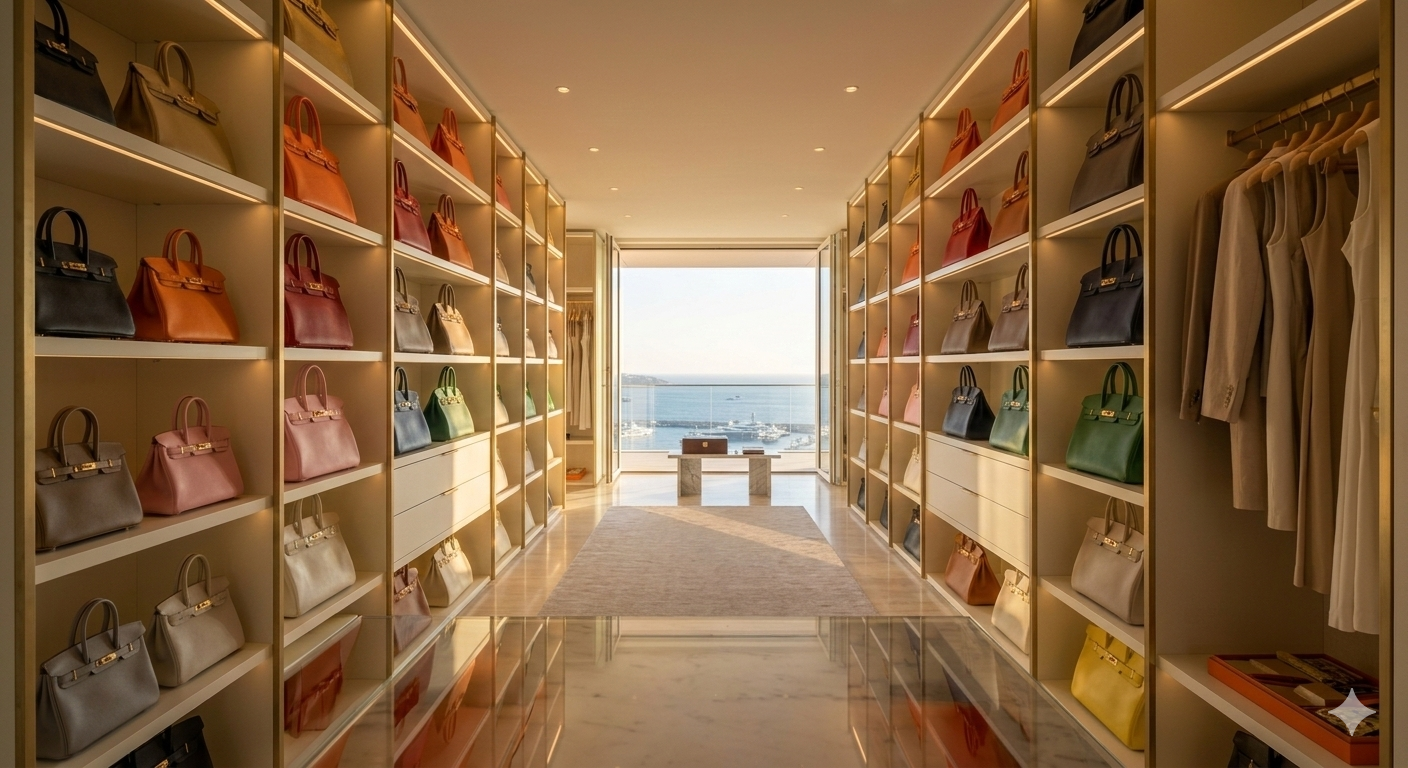
Size: The two primary sizes are the 25 and the 30. The 25 is compact, more evening-appropriate, and increasingly the choice for clients who want something refined over something functional. The 30 is the most versatile — it works for a full day's use, travel, and evening. The 35 and 40 are larger and read more casually; they have become less central to the current market. I guide most clients toward the 30 unless they have a specific functional reason for another size.
Leather: Togo is the most common — a pebbled leather that resists scratching and holds its shape well. Clemence is slightly softer and tends to slump slightly over time, which some clients love and others find unsatisfying. Epsom is structured and lightweight, making it excellent for travel. Swift is smooth and refined but marks more easily. For the exceptional versions: Porosus crocodile from Niloticus or Porosus species, and ostrich, are the apex materials — their price and rarity are real, not manufactured.
Colour: The advice I give every client without exception: start with a neutral. Rouge H (a deep burgundy), Gold (the warm cognac that Hermès has been making since the 1970s), Etoupe (a warm grey-taupe), and Noir are the four foundation colours. They work with everything, they age beautifully, and they are the most resilient investments. Rare colours — Rose Sakura, Bleu Électrique, Vert Jade — are extraordinary but suit specific wardrobes. They are a second or third Birkin decision, not a first.
Hardware: Gold palladium (silver-tone) or gold-tone. This is personal, but it should be consistent with the rest of your jewellery and accessories. A client who wears exclusively yellow gold should not buy a bag with palladium hardware, and vice versa. The hardware ages differently from the leather and cannot easily be changed.
The secondary market: when it makes sense
For clients who want a specific Birkin immediately — a particular size, colour, and leather combination — without building a retail relationship, the secondary market is a genuine option. The reputable resellers in this space include Vestiaire Collective (which authenticates all luxury pieces), Rebag, Fashionphile, and specialist vintage dealers in Paris and Tokyo who handle exceptional pieces. The premium over retail is real but not always unreasonable for in-demand combinations — and for rare colours or exotic leathers that are no longer produced, the secondary market may be the only option regardless of your retail relationship.
Authentication is non-negotiable when buying secondhand. The counterfeit Birkin market is sophisticated. I have examined pieces that were convincing enough to pass casual inspection but failed on the stitching angle, the hardware weight, and the interior stamp date code. If you are not expert, work with someone who is.
The investment question
Clients frequently ask whether a Birkin is an investment. The honest answer: yes, with significant qualifications. Standard leather versions in classic colours have appreciated consistently over the past two decades, outperforming many traditional asset classes. But the appreciation is not guaranteed, is not liquid — selling requires finding a buyer, accepting a platform fee, and navigating authentication — and is highly condition-dependent. A Birkin stored correctly in its dust bag, used carefully, and serviced at Hermès when needed will hold its value. One that has been poorly stored, exposed to moisture, or extensively scratched will not.
The better frame: buy the Birkin because you will use it, love it, and care for it. If it appreciates, that is a bonus. Buying purely for financial return is the wrong approach to an object that requires this level of relationship and care.
If you're navigating the process of acquiring a Birkin — or building the Hermès relationship that makes it possible — this is exactly the kind of strategy I work through with clients. Discover my Personal Shopping & Wardrobe Exclusive service.



%20(1).webp)